
Commercial Network Cabling in Mississauga & GTA
Commercial structured cabling for offices, warehouses, and retail — Cat6, Cat6A, and fiber — designed, installed, tested, and certified across Mississauga, Toronto, and the GTA.
AN Telecom Solutions is a Mississauga-based commercial network cabling contractor. We design and install structured cabling for offices, warehouses, retail stores, industrial facilities, and commercial buildings throughout Mississauga, Toronto, and the Greater Toronto Area.
We install Cat6, Cat6A, and fiber optic cabling for computers, VoIP phones, Wi-Fi access points, IP cameras, POS systems, and other network equipment — from planning and installation through labelling, Fluke testing, and certification. For larger commercial and construction-led scope, see our commercial network cabling overview or low voltage subcontracting for general contractors.
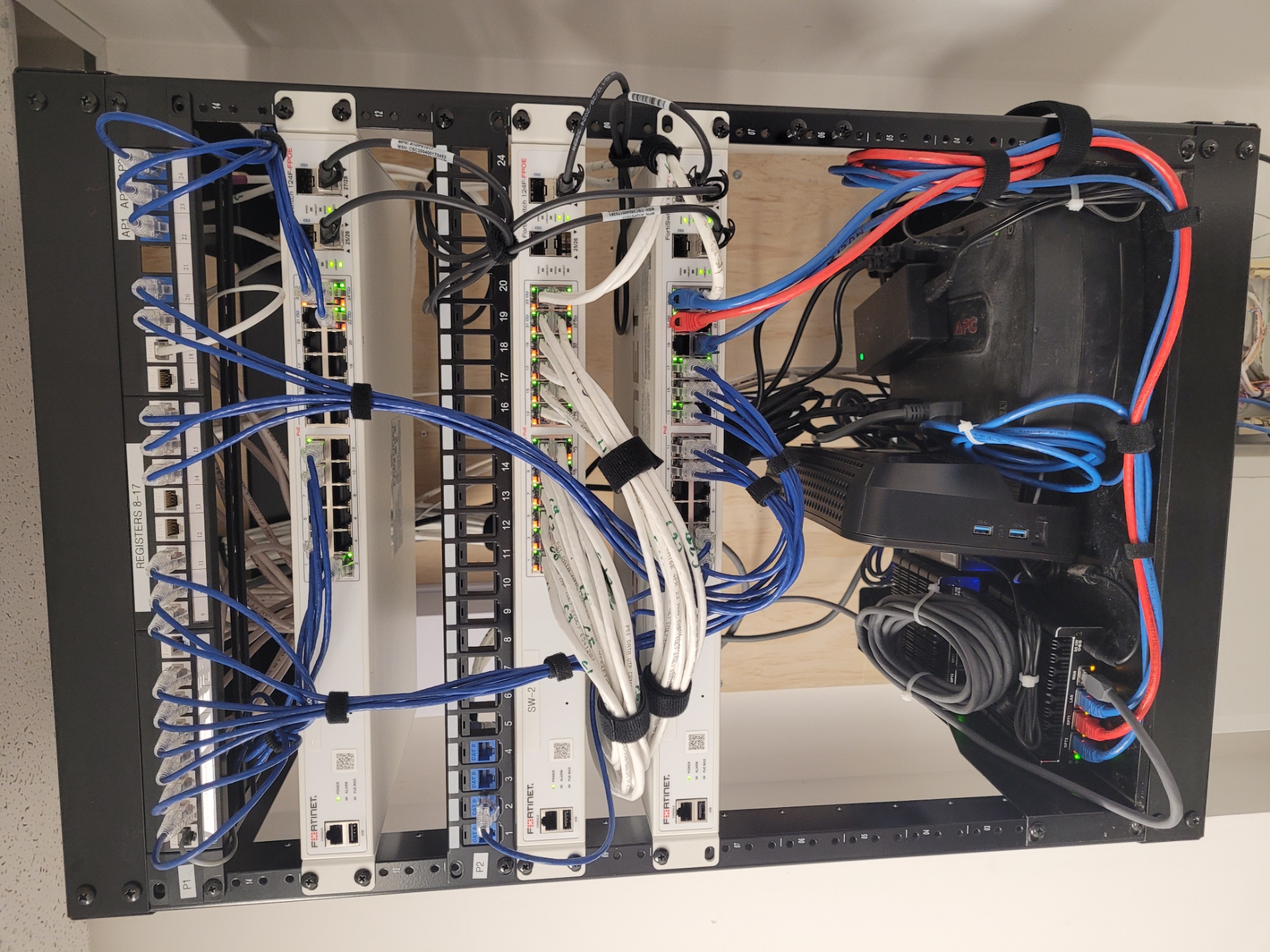
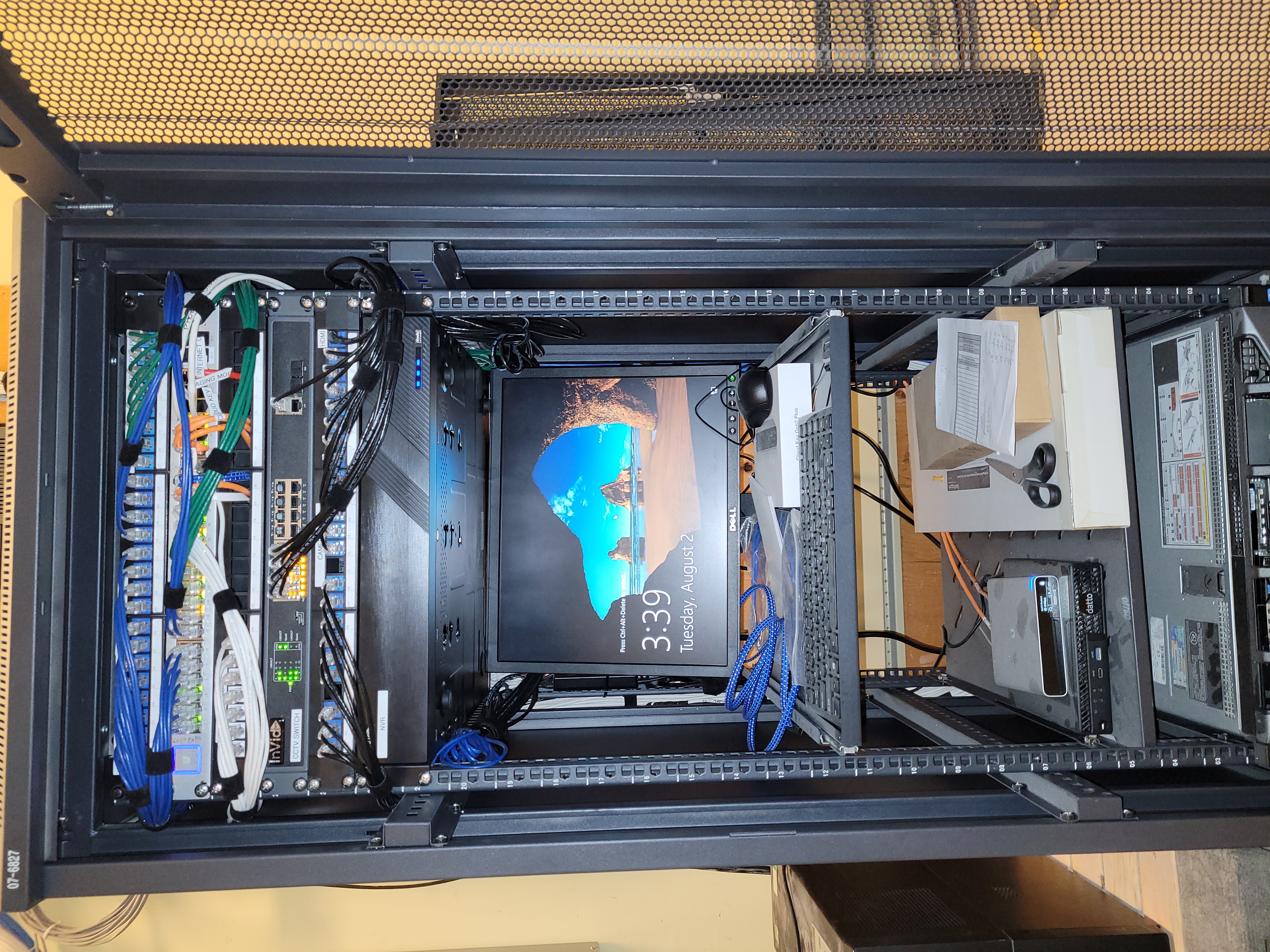
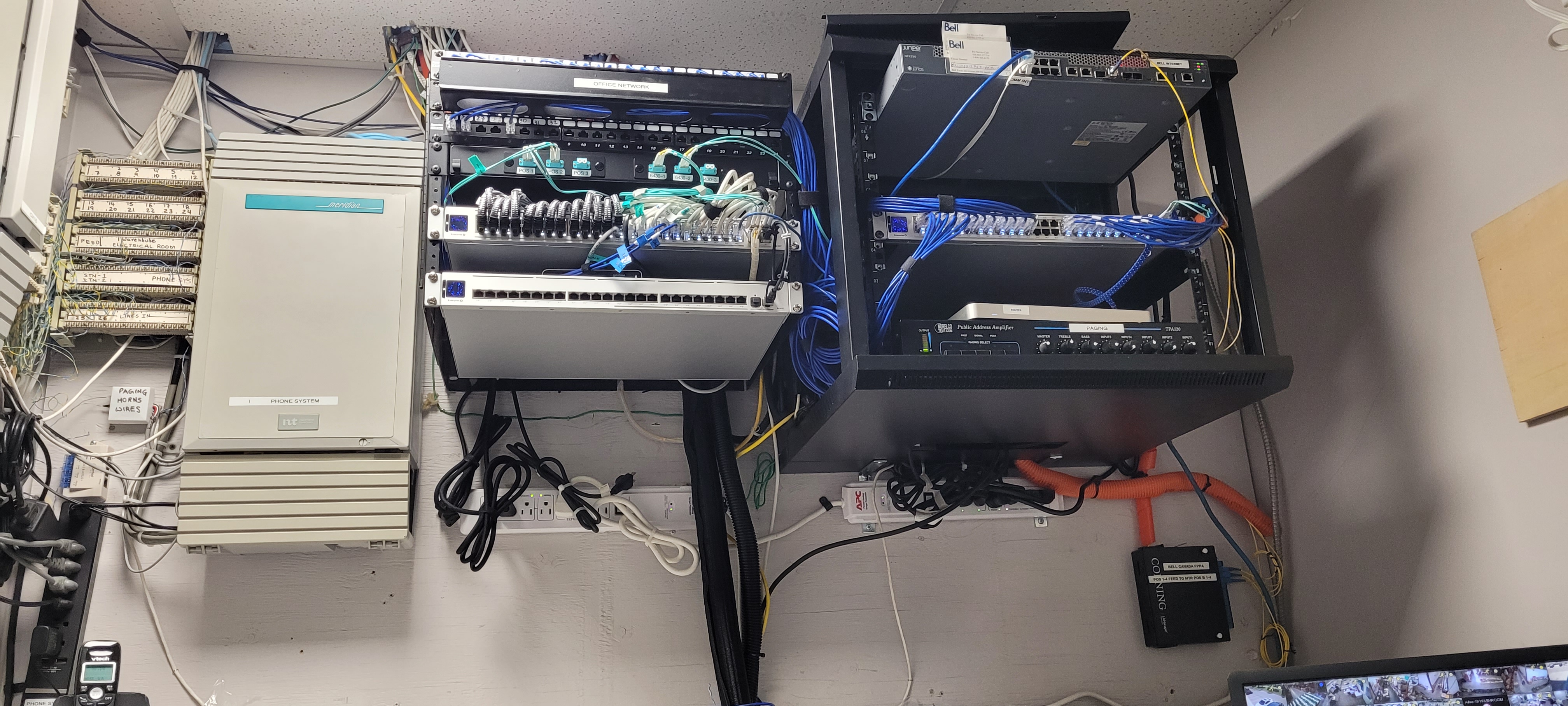
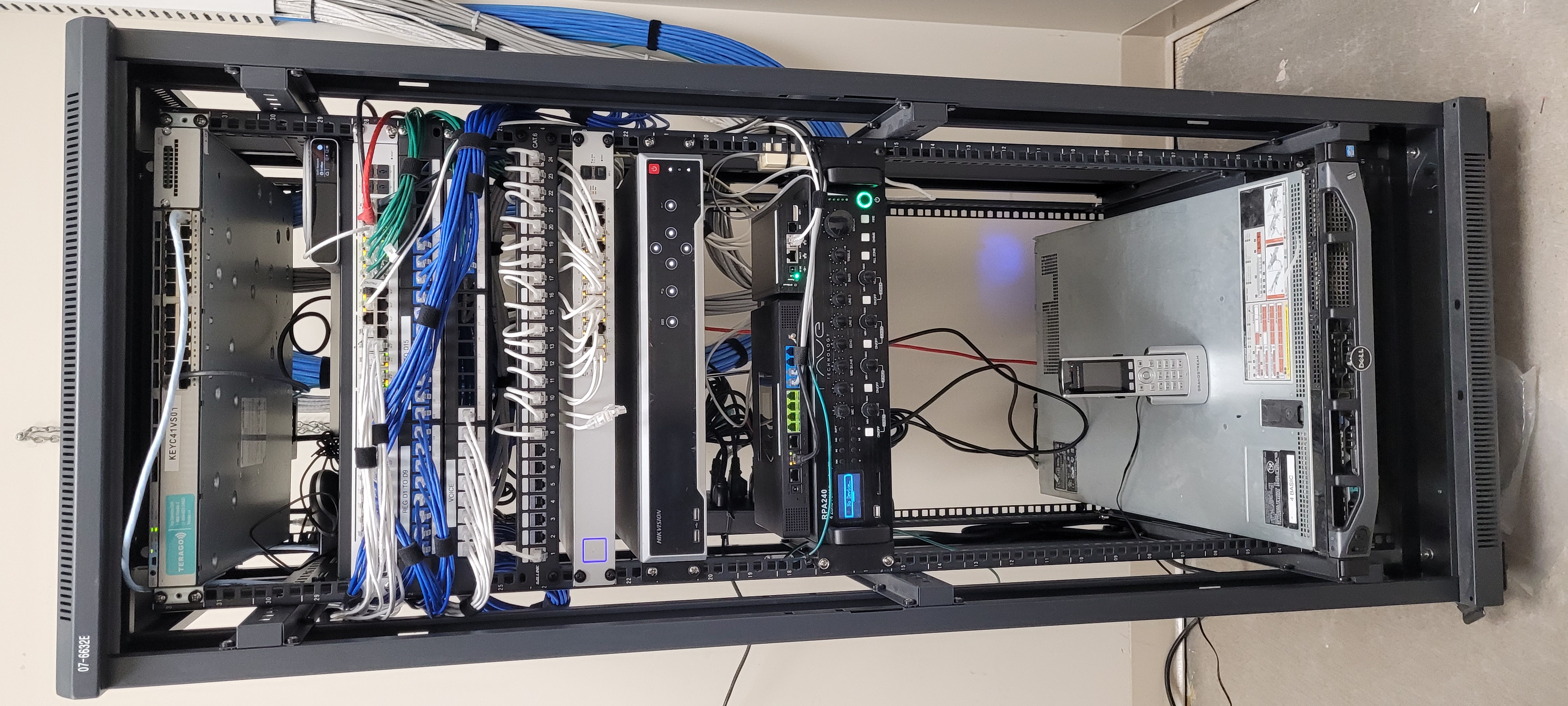
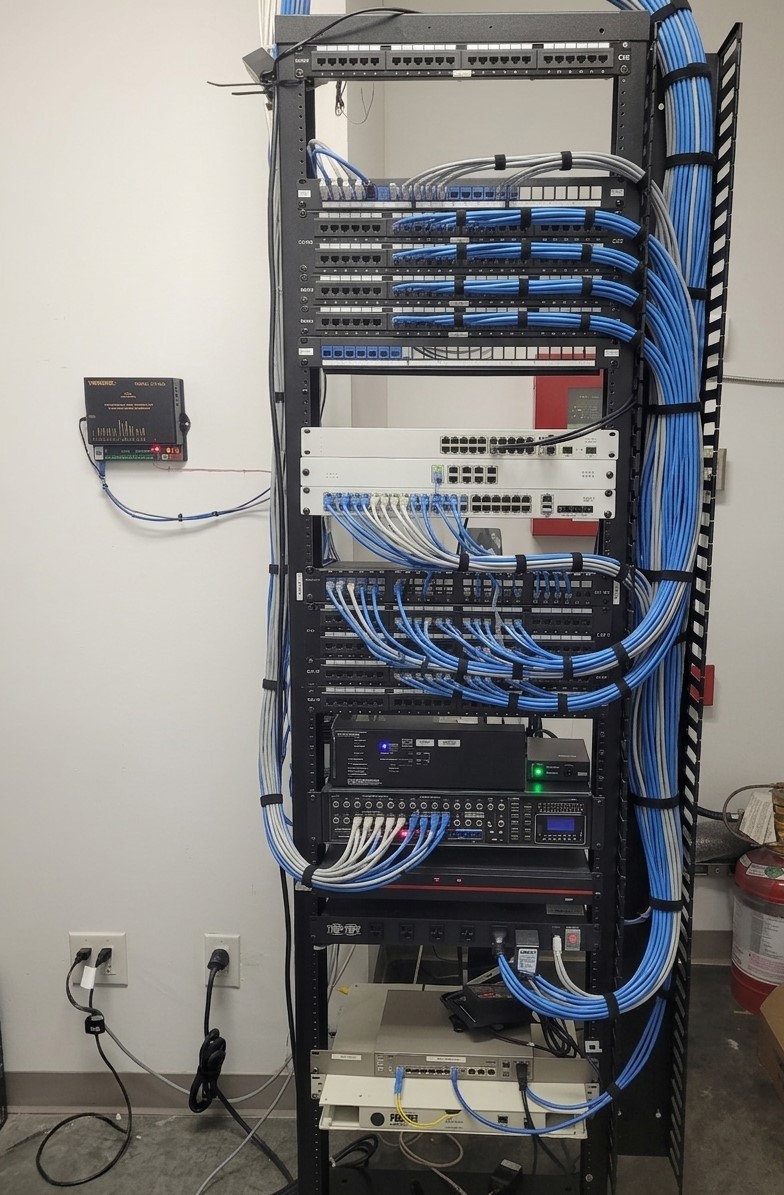
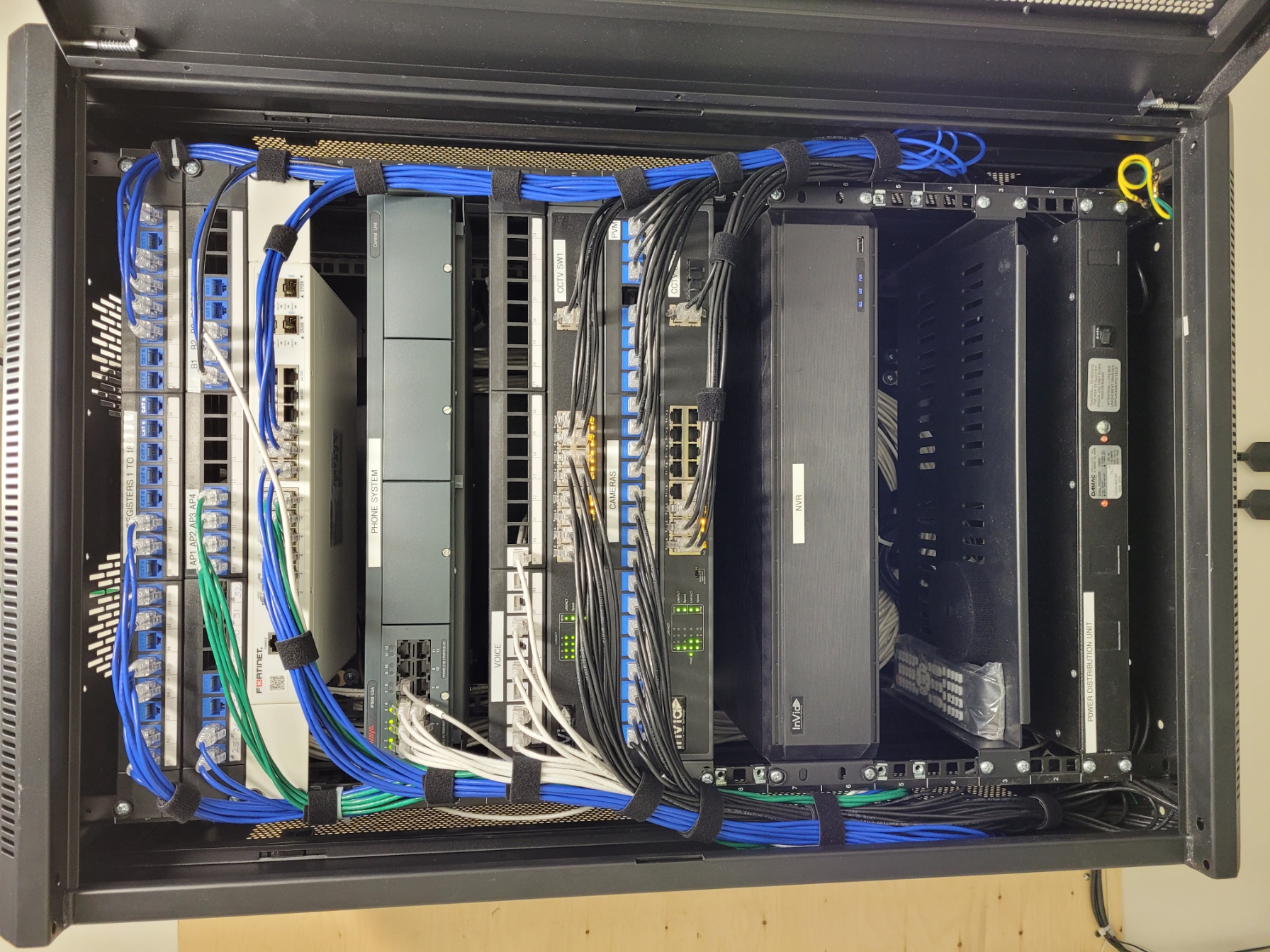
See rack and structured cabling installations from recent GTA projects.
Commercial Network Cabling Services
We provide complete structured cabling for new construction, renovations, office relocations, tenant improvements, and existing commercial facilities.
- Cat6 and Cat6A cabling for voice, data, and PoE devices
- Fiber optic cabling for backbones and building-to-building links
- Network racks, patch panels, and cable management
- Wi-Fi access point cabling and PoE infrastructure
- Server room and data closet cabling
- Moves, adds, and changes (MAC work)
- Testing and certification with professional Fluke equipment
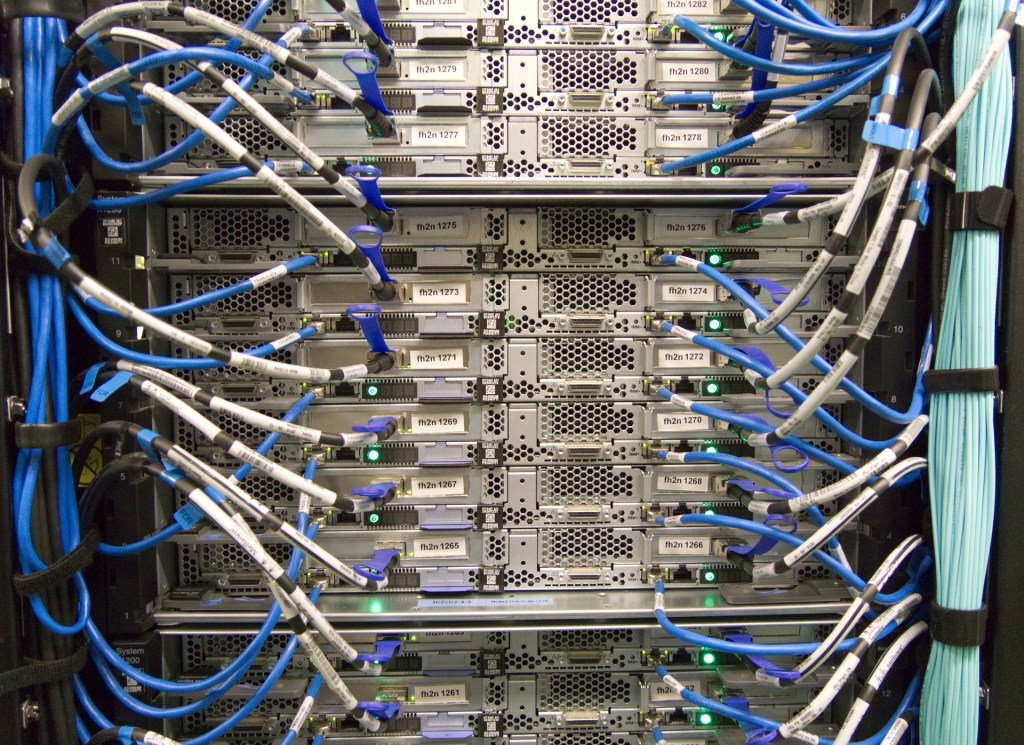
Network Cabling for Commercial Facilities
We install network cabling across commercial environments in Mississauga and the GTA — not residential Ethernet jobs.
Offices & Corporate Spaces
Workstation drops, VoIP phones, Wi-Fi access points, printers, meeting rooms, and connections to server rooms or IDFs.
Warehouses & Distribution
Long cable runs, IDF and MDF links, fiber backbones, warehouse Wi-Fi, IP cameras, and network drops across the floor plate.
Retail Stores
POS terminals, back-office networks, guest Wi-Fi, CCTV infrastructure, and reliable cabling for payment and inventory systems.
Industrial Facilities
Structured copper and fiber for offices, production areas, equipment rooms, and large facilities with demanding pathway requirements.
New Construction & Tenant Improvements
Low-voltage cabling from drawings and specifications through rough-in, termination, testing, and handoff — including GC-led commercial builds and commercial network cabling scope.
Relocations & Renovations
New drops, cable clean-up, MAC work, and rack relocation when your business moves or reconfigures space.
Recent Network Cabling Projects
From organized network racks and patch panels to structured copper and fiber installations — commercial infrastructure built for reliability, serviceability, and future expansion across the GTA.
The Five Subsystems of Structured Cabling
A structured cabling system follows the TIA-568 standard and consists of five standardized subsystems, each serving a specific function in the network infrastructure. Understanding these subsystems helps when scoping a project — whether it's a single-floor office or a multi-storey commercial building.
Demarcation Point
Where the telephone company or ISP network ends and connects with your on-premises wiring. This is typically where your building's cabling responsibility begins.
Equipment Rooms
Houses network switches, patch panels, servers, and wiring consolidation points that serve users inside the building or campus.
Riser Cabling
Vertical backbone cabling that connects equipment rooms and telecommunications closets across floors. Often runs through conduit or cable trays in the building core.
Horizontal Wiring
Runs from telecommunications rooms to individual outlets and work areas through wireways, conduits, and ceiling spaces. This is the bulk of a typical cabling project.
Work-Area Components
Patch cords, wall plates, and jacks that connect end-user equipment — computers, phones, printers, access points — to the horizontal cabling system.
Cat6 vs Cat6A for Commercial Network Cabling
Both Cat6 and Cat6A are common choices for commercial network installations in the GTA. The right choice depends on run length, PoE load, how long you want the plant to last, and what the project specification calls for.
Cat6
Supports 10 Gbps at shorter distances (up to about 55 metres on a typical channel) and operates at 250 MHz bandwidth. A solid choice for many office drops running data, voice, video, phones, and standard PoE for access points and cameras when runs are not at the distance limit. Lower material cost and easier to terminate.
Cat6A
Supports 10 Gbps across the full 100-metre channel and operates at 500 MHz bandwidth. Often specified for new commercial builds that need 10-Gigabit headroom on longer horizontal runs, tighter performance margins, or higher-power PoE (PoE+ / PoE++) on dense device layouts. Thicker cable and slightly higher material cost than Cat6.
For many new office and commercial projects in Mississauga and the GTA, Cat6A is our usual recommendation when the spec allows—the incremental material cost is modest compared with labour, and it leaves more room as port speeds and PoE budgets grow. Cat6 remains a reliable option for shorter runs, lighter PoE loads, and budget-sensitive retrofits.
Fiber Optic Cabling & Building Backbones
For links that need higher bandwidth, longer distances, or connections between telecommunications rooms and buildings, AN Telecom Solutions installs single-mode and multi-mode fiber optic cabling as part of your structured cabling plant.
We pull and terminate backbone fiber, install patch panels in MDFs and IDFs, and perform fusion splicing, OTDR testing, and optical loss testing when the specification requires it. Fiber often runs alongside Cat6/Cat6A horizontal cabling — we coordinate both so your copper and fiber infrastructure is documented and serviceable.
Network Cabling Testing & Certification
Every new network cabling installation is tested before project completion. Proper testing helps identify wiring faults, termination problems, and performance issues before the network is put into service.
We use professional-grade Fluke testers to verify copper runs against TIA/EIA performance requirements. Depending on the project, we provide cable testing, port labelling, and documentation for installed drops. For commercial projects that require certification, test results can be supplied as part of project handoff — useful for compliance, insurance, and future troubleshooting.
Frequently Asked Questions
What is structured cabling?
Structured cabling is a standardized approach to building network infrastructure. Instead of running cables ad hoc, the system is designed with defined subsystems — demarcation, equipment rooms, backbone risers, horizontal runs, and work-area outlets — all following TIA/EIA-568 standards. This makes the network easier to manage, troubleshoot, and expand over time.
How much does commercial network cabling cost in Mississauga?
Cost depends on drop count, cable category (Cat6 vs Cat6A), ceiling height, pathway difficulty, after-hours access, and whether the work is new construction or a retrofit in an occupied space. Warehouse and industrial jobs often cost more per drop than standard office drywall because of longer runs, conduit, and safety coordination. We provide on-site assessments and detailed quotes — contact us with your floor plan or scope for an estimate.
Should I choose Cat6 or Cat6A for a commercial build?
Cat6 fits many office drops with standard data, voice, and typical PoE when runs are not at the distance limit. Cat6A is often chosen for new commercial work that needs 10-Gigabit headroom on longer horizontal runs or higher-power PoE (PoE+ / PoE++) on cameras and access points. Material cost for Cat6A is modest compared with labour; Cat6 remains appropriate for shorter runs and budget-sensitive retrofits.
Do you install network cabling in warehouses and distribution centres?
Yes. We install structured cabling for warehouse offices, shipping areas, Wi-Fi access points, IP cameras, and IDF/MDF links — including long horizontal runs and fiber backbones when distances exceed practical copper limits. We coordinate access and safety requirements typical of active warehouse environments.
Can you quote network cabling from construction drawings?
Yes. For new construction, tenant improvements, and GC-led projects we review drawings and specifications, clarify scope and exclusions, and provide a written quote. We also work from floor plans, redlines, and site walkthroughs when formal drawings are not available. General contractors can review our low-voltage subcontracting overview for commercial build workflows.
Do you test and certify cabling after installation?
Yes. New copper installations are verified with professional Fluke testers against TIA/EIA performance requirements before handoff. Depending on the project, we label ports, provide as-built documentation, and supply certification reports when required by the specification.
Do you install fiber optic cabling as part of a network project?
Yes. We install single-mode and multi-mode fiber for building backbones, telecommunications room links, and MDF/IDF connections, including termination, patching, and optical testing when specified. Horizontal workstation cabling is still typically Cat6 or Cat6A; fiber is used where distance or bandwidth calls for it. See our fiber optic installation service for more detail.
How long does a network cabling installation take?
A small office (10–20 drops) typically takes 1–2 days. Larger commercial projects with 50+ drops, riser cabling, and server room buildout can take 1–2 weeks depending on building access and complexity. We schedule around your business hours whenever possible to minimize disruption.
Do you service areas outside Mississauga?
Yes. While our office is in Mississauga, we provide on-site network cabling installation across the entire Greater Toronto Area — including Toronto, Brampton, Oakville, Vaughan, Markham, Hamilton, and surrounding cities in Southern Ontario.
Request a Commercial Network Cabling Quote
Planning drops, cable category, and testing for an office, warehouse, retail space, or renovation? Call our Mississauga team or send your scope through the contact form — floor plans and specification excerpts help us quote accurately.